In partnership with

Hi everyone!
4 months ago, I had this silly argument with a founder friend.
I was moving in a rush to a new city and had to tour like 15 apartments over a weekend. I told him: "I can't pick a place without seeing it first. Photos don't count."
He laughed at me. "You pick places from photos all the time. Hotels. Airbnbs. Those vacation rentals you book."
"Yeah. For a week. Maybe a month if I'm pushing it. Not a whole year."
And that's the thing. A year feels different. A year is a commitment and risk. What if I hate it, and now I'm stuck, for example, here?

Turns out people feel the exact same way about annual billing.
Annual plans can spike your revenue fast (like x4 ARR with one of my clients after we revamped the strategy). They can also completely wreck your upgrade motion if you shove them at people before they're ready.
And before you start the "pushing annual is evil" rant, hold on. Annual itself is fine. Preselecting it on the paywall? Fine. Showing the savings? Fine. Running promotions? Also fine.
The mess starts when teams keep shoving annual in people’s faces before they’re ready. And then act surprised when upgrades drop across the board.
The Ghosted Moment
You preselect annual (good move). You show the discount (also good). You keep monthly available (yep, good).
And still, most people pick monthly (spoiler alert: they always will, and it’s fine).
For one client, we dug into why people hesitated on annual (especially in B2C). Surprisingly consistent:
"I want to test it first." (No trial, no freemium, so monthly becomes the trial.)
"I want flexibility in case I find something better." (They don't want to feel trapped.)
"I don't want a big bill today." (Most of the time this is a trust question in disguise.)
Look, you can (and should!) put annual on the paywall. You should even pre-select it; defaults work for a reason.
But when you keep hammering annual at the wrong time, or worse, when you remove monthly entirely, you're not converting skeptics. You're triggering resistance. You're training people to ignore you. You're turning your upgrade prompts into spam.
Introducing the first AI-native CRM
Connect your email, and you’ll instantly get a CRM with enriched customer insights and a platform that grows with your business.
With AI at the core, Attio lets you:
Prospect and route leads with research agents
Get real-time insights during customer calls
Build powerful automations for your complex workflows
Join industry leaders like Granola, Taskrabbit, Flatfile and more.
What’s Behind It
Annual is hard for the same reason that picking an apartment from photos is hard.
You're asking people to commit before they feel certain.
There are three questions hiding inside "Should I go annual?" and they map pretty cleanly to actual behavior patterns people have studied:
"Will I actually use this enough?"
People are terrible at predicting their future behavior. We all overestimate how much "future me" will keep doing the thing, especially when we're excited right now. That's projection bias in action.
Plus, when the outcome feels fuzzy (like "Will this actually fit into my life?"), people just default to the safer, more reversible choice. That's your favourite ambiguity aversion.
Monthly is basically cheap insurance against being wrong.
"What if I find something better?"
This one's regret avoidance.
Annual makes switching feel expensive emotionally, even when the price is objectively a good deal. People don't want to lock themselves into something they might regret later. And your competitor is literally one TikTok video away.
When you push the commitment too hard, you also trigger reactance. That "don't tell me what to do" reflex everyone has when they see a sales message on LinkedIn.
"Do I trust this enough to pay a big bill today?"
Upfront payment creates real psychological friction. Paying feels like a loss, and losses sting way more than equivalent gains. That's prospect theory and loss aversion.
There's also just the plain "pain of paying" effect. The bigger and more immediate the payment, the more it hurts, and the more justification people need before they'll click.
So when someone says "I don't want to pay $179 today," half the time what they actually mean is: "I'm not confident enough this won't disappoint me."
Psychology Cheatsheet
User question: Will I actually use this enough?
Bias: projection bias
Design answer: post-habit annual trigger + usage proofUser question: What if I find something better?
Bias: status quo bias + reactance
Design answer: keep monthly visible + add social proofUser question: Do I trust this enough to pay the bill today?
Bias: loss aversion + pain of paying
Design answer: high-intent placement + concrete $ savings
Join cool people who share great content
How to Turn It Around
Here's my rule: every annual touchpoint should answer one of those questions people are already asking themselves. If it doesn't answer a question, it's just noise. And noise turns into avoidance real fast.
1) “Will I actually use this enough?”
Answer: show annual twice — once for awareness, once for confidence.
Paywall (awareness): preselect annual, show the savings, keep monthly clearly available. Defaults matter because people follow the path of least resistance.
The goal here is to let the “I already know what I’m doing” buyers pick annual immediately.Post-habit (the real annual moment): trigger the serious annual offer after the user shows a stable pattern.
This is where you can say, without sounding like a scam:“You’ve used this X weeks in a row.”
“You’ve spent X hours here in the last 30 days.”
“You’ve got X results.”
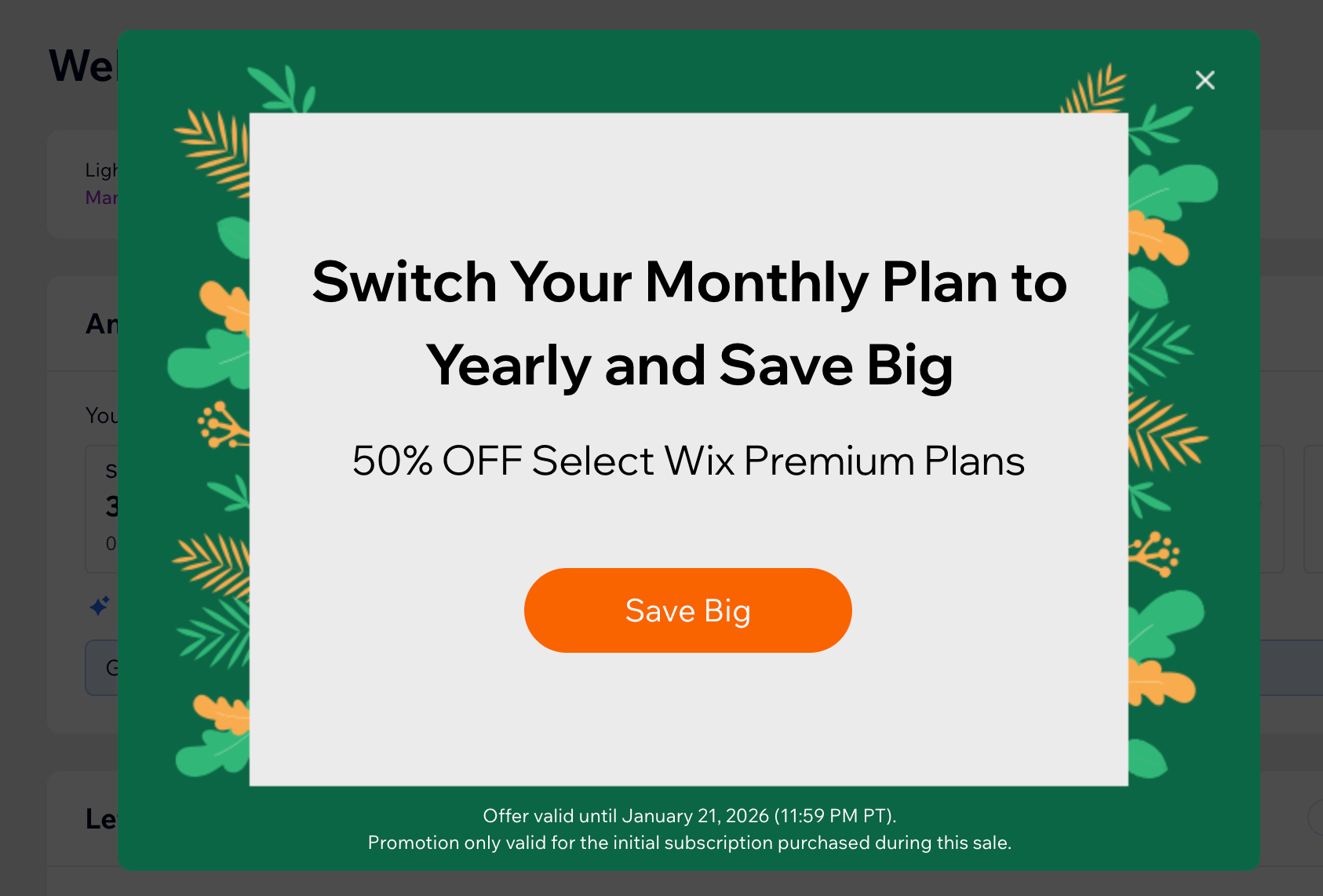
But still, the most effective trigger for a monthly to annual upgrade motion is deadly simple: savings, discounts, the feeling of a great deal. Use behaviour to trigger the message, but don’t underestimate the focus on savings.
2) “What if I find something better?”
Answer: make the choice feel informed without begging.
Show a competitor comparison if it helps people decide faster. Some products do this well: they don’t trash competitors, they just reduce the mental load of decision-making.
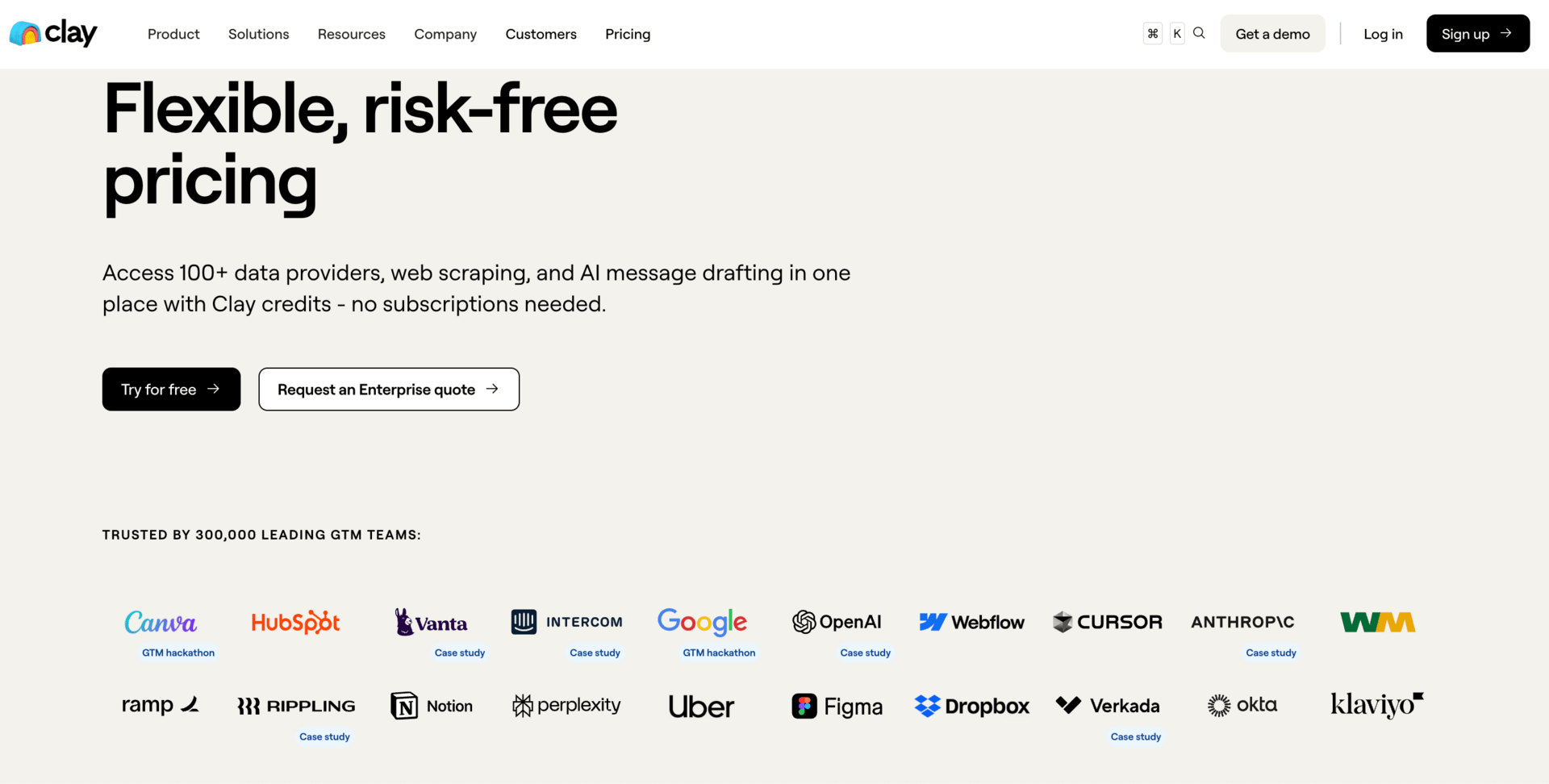
Show social proof: remind them that credible teams already picked you (logos, “trusted by ___,” short quotes), so the decision feels less like a lonely bet and more like joining something that already works.
And yes — you can also anchor people back to their own progress (“you’ve already done X with us”).
3) “Do I trust this enough to pay the bill today?”
Answer: reduce payment pain + keep the offer in high-intent places.
Place annual prompts where users already expect billing decisions: plan settings, account, checkout, billing screens. When you surface annual randomly during core product actions, it feels like you’re hijacking their session.
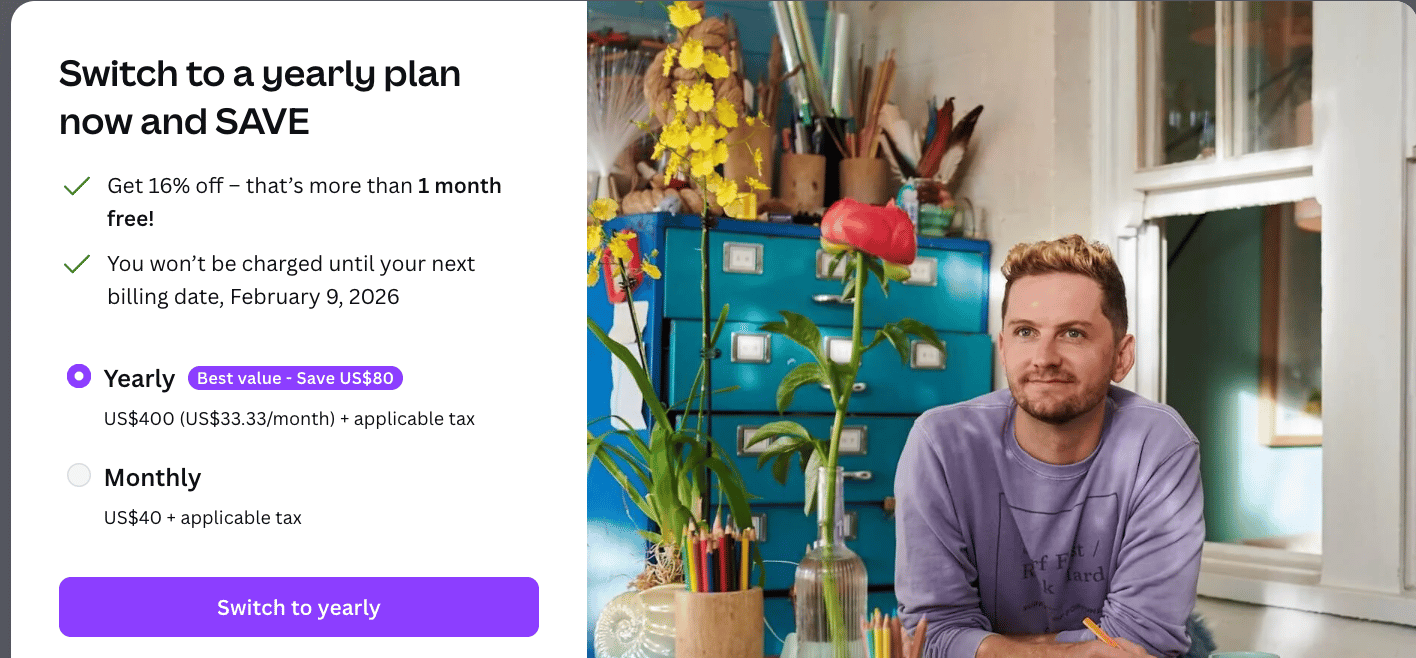
Translate savings into dollars when possible: “Save $120/year” lands better than “Save 20%” because it’s concrete.
Copy templates you can steal
Post-habit modal (habit proof):
“You used [product] on [X] days in the last [Y] days, looks like this is part of your process now. Switching to annual saves you $[Z] this year.”
Settings / billing page banner (low-pressure):
“Get [X] months on us. Switch to annual today.” [client logo] [client logo] [client logo] [client logo] [client logo]
Paywall microcopy (trust):
“Get [X] months free with annual.” “Save $[Z] with annual.”
Join cool people who share great content
If you forget everything, remember this:
If you bully people into annual, you’ll just buy churn.
Design annual offers for different stages of awareness: make sure everyone knows annual exists, but only ask for the bigger commitment when it actually makes sense for that user — after they’ve built trust, seen value, and you can prove it from their own behavior.
🎉 Woow, you finished the issue, that’s awesome!
Hi, I’m Anastasia Kudrow, and I write Ghosted.
I am also a product growth consultant. I help SaaS teams apply psychology and PLG to build growth they can actually control. I run my own project, Growing Pains, and also work with one of the leading PLG consulting agencies, ProductLed, led by Wes Bush.
Feel free to follow me on LinkedIn: https://www.linkedin.com/in/anastasia-kudrow/
Or check out my website, maybe we can work together: https://www.growingpains.consulting/
See you next week!