Hey everyone!
Last week I argued that wanting has to come first, that no reward makes someone recommend a product they don't already love. A few of you replied, and one of you asked me to break down Magic Patterns' entire upgrade motion, which I'll do properly over the summer because there's a lot in there.
Today I'm staying on referrals and pulling out one small thing they get right: how you ask the people who already love you. As always, comment on Beehiiv, mention @Anastasia Kudrow for discussions on LinkedIn, or just hit reply.
Btw, don’t ignore this 👇
submit a product you are curious about
THE FIND
Magic Patterns is an AI design tool. You describe a screen or a flow, it generates real, working UI you can hand straight to engineers, and every generation spends credits. Go deep on a project and you burn through them fast (I’ve been there).
I use it constantly with clients. I'm not a designer, but I know what good looks like, and this lets me show it, an interactive version of the thing in my head, before it ever reaches a real design or dev review. Yesterday I was mid-task, burning through credits, getting close to my limit. Then I saw this.
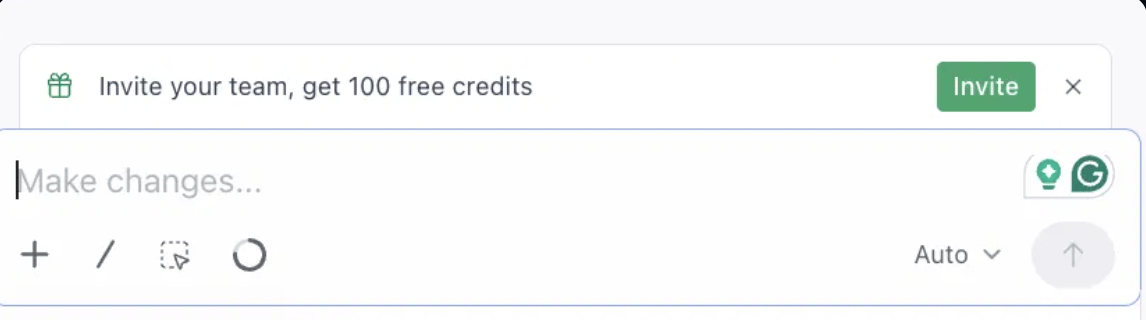
It didn’t hit at the moment when my credits went dry; that was a place for a classic upgrade trigger. But this one showed up right when I was experiencing value, without being threatened by a potential usage block.
Most tools bury the referral link in a settings page nobody opens. Magic Patterns puts it on top of the editor, at the exact moment I need more credits, and the reward is credits, the thing I'm burning through, not a ten-dollar gift card I'd forget by lunch.
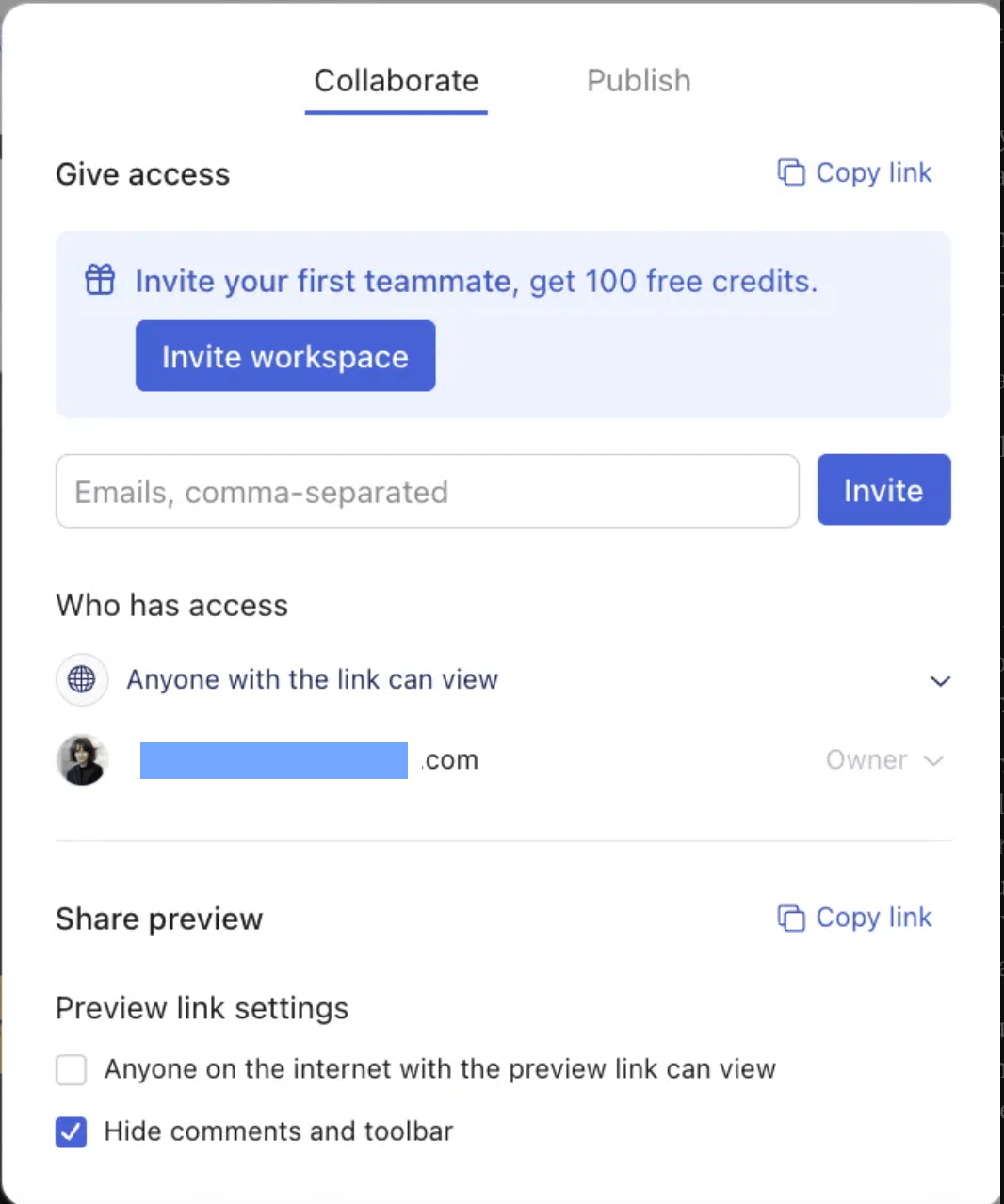
Then they fire the same offer again, the second I want to share a project with a teammate (again, a clear value indicator).
PSYCHOLOGY BEHIND
Wanting to do something and actually doing it are further apart than they look. The gap usually gets closed by something small: a prompt that shows up at the right moment and makes acting easy right now.
Psychologists call that a channel factor. The clearest study is Leventhal, Singer, and Jones, back in 1965. They handed Yale students a frightening pamphlet about tetanus. The students came away more scared and said they meant to get vaccinated, but almost none did, around 3%. A second group got the same pamphlet plus a campus map with the clinic circled and its hours. Vaccinations jumped past 30%, roughly a tenfold difference. Same fear, same stated intent, but the map did the work.
But the map only helps once the wanting is already there, so the real question is when that wanting shows up. A team invite is still a social bet: you're telling coworkers this tool is worth their time, and your name is on it. How early you'll make that bet depends on the risk.
When the product is a familiar category, or something the team has no real choice but to adopt, the risk is low and people invite from the first screen.
Push them toward yet another unproven tool and you're the one who dragged everyone in, which is exactly the social suicide nobody commits on faith. They want a happy moment first, proof it works, before they'll put their name on it.
THE PLAYBOOK
When to keep it in mind:
You can point to a moment where a user clearly succeeds: an output they came for, a result they can see, or a stretch of heavy, invested use. Workspace and credit- or seat-based products get the most from this, because the person you invite lands inside your account and becomes another seat.
How to use it:
1. Trigger on a result.
The strongest moment to ask is right after someone gets the thing they came for, a finished prototype, an exported file, the first report that actually works. They have proof in hand, and they're willing to put their name next to it. Ask here and the referral brings in someone with the same problem, the highest-fit user you'll ever get. It can depend on how complex your motion is and if one person can achieve any result without the team, of course. Which brings me to the second point.
2. Trigger on deep engagement.
Not every product has a single finish line. Some just get used, hard. The person on their fifteenth iteration, or the one burning through credits, is telling you they're invested, and that's its own signal of willingness. Fire there, and let the reward pay off the moment: Magic Patterns offers credits right as you're running out, so the ask reads as help rather than a pitch.
3. Stay inside the flow.
A success moment is fragile. Interrupt it with a modal that stops the user cold and you've turned a good feeling into friction. Keep the trigger next to the work, a small banner over the editor, an inline nudge on the screen they're already on, something they can act on or wave off without losing their place.
When it backfires:
Don’t reach out to those who experience problems with your product. To them, it will seem borderline offensive even if the offer is good.
If you forget everything, remember this:
We don’t need an additional trigger to share negative feedback. But we do need that one tap to share something that we love because otherwise, we just take it for granted.
🎉 Woow, you finished the issue, that’s awesome!
Hi, I’m Anastasia Kudrow, and I write Ghosted.
I also help SaaS teams get more upgrades by using psychology instead of cheap tricks. Because hype aside, people will be buying your product for many more years, AI or not AI.