

I don’t know about you, but my feed is split between “AI will save your business” and “Look how much AI sucks”. And I have to make a confession. I don’t really find this argument fascinating, and it’s getting exhausting.
What I do find fascinating is the way AI adoption, and even simply talks about AI, change our (and users’) behaviour. Because this is something I have to solve every day. I don’t know if AI will kill SaaS but it is already changing how people interact with SaaS and really want to explore that.
And wherever you look, there’s one problem that's gotten bigger than others.
I’d call it the expectations gap.
Because as heartbreaking as it is, users don’t evaluate our product by some absolute scale. They compare it against other options, former experience and finally, the impression they got from our promises, even if they were absolutely subjective. And the scaling AI adoption created a whole new bar for those expectations.
So I truly believe that the expectation gap, aka the difference between what we expect and what we get at different steps, is the key to figuring out how to create a great user experience and build a healthy business.
In the next issues, I want to dive into challenges that we see that were created by this gap (which is actually way more complex than it sounds) and see how we can close it.
THE CHALLENGE
You saw all of these AI complaints. How bad the output is, how sloppy it is, how stupid the automated outreach is. Maybe I’m wrong, but I don’t remember people being this publicly dissatisfied with any other technology.
I’m not bringing it up because I’m worried about AI’s feelings (although maybe I should be, dear overlords). I’m bringing it up because the quality of that output is a growth metric now. And it’s relative and subjective as hell.
If people think what came out is good enough, they think the product is worth carrying on with. If they don’t like it, they don’t like it, and that’s the end of it.
And guess what, AI products often have horrible retention. Every other question I get from AI products is related to churn. Activation looks great, because everyone is eager to try the magic button. But then they ghost.
And I have a hypothesis why.
THE GAP
Officially, the expectation gap comes from mismatched results. All the AI positioning makes us believe that it will magically solve our problem in the best way, but somehow it always seems worse than the real thing.
But…
I don’t think we’re judging the output at all. We’re judging something we had no part in making, and we are merciless about those.
I can bet you’ve given feedback to an AI that you would never say to a person’s face. You’d definitely never say it to yourself (even though the thing you’re tearing apart got built from your prompt, but it doesn’t automatically feel like yours, does it?).
There’s a study (way more than one) that shows how far this goes. Michael Norton, Daniel Mochon and Dan Ariely sat people down with written origami instructions and had them fold a frog or a crane, which mostly came out badly, because folding origami off an instruction sheet is genuinely hard. Then they asked what they’d pay to keep the thing they’d just made. Separately, they took a group who hadn’t folded anything, put the same amateur origami in front of them, and asked the same question. A third group was shown origami made by actual experts.
You know where I’m getting with it, right?
The builders bid 23 cents for their own crumpled paper. The people who hadn’t made it bid 5 cents for those exact same objects, so near enough worthless. The expert origami went for 27 cents, which puts the builders’ own bad frogs within four cents of professional work. And the builders assumed everyone else would agree with them.
So whenever we work with AI output, what we see is somebody else’s crumpled paper. It’s never good enough, because it happened without our effort.
HOW TO CLOSE IT
I found a couple of fixes that actually don’t mess with your output at all but work with other steps to adjust the framing.
Make me work.
Ask users for something but don’t be greedy. Just one real decision that changes what comes out the other end.
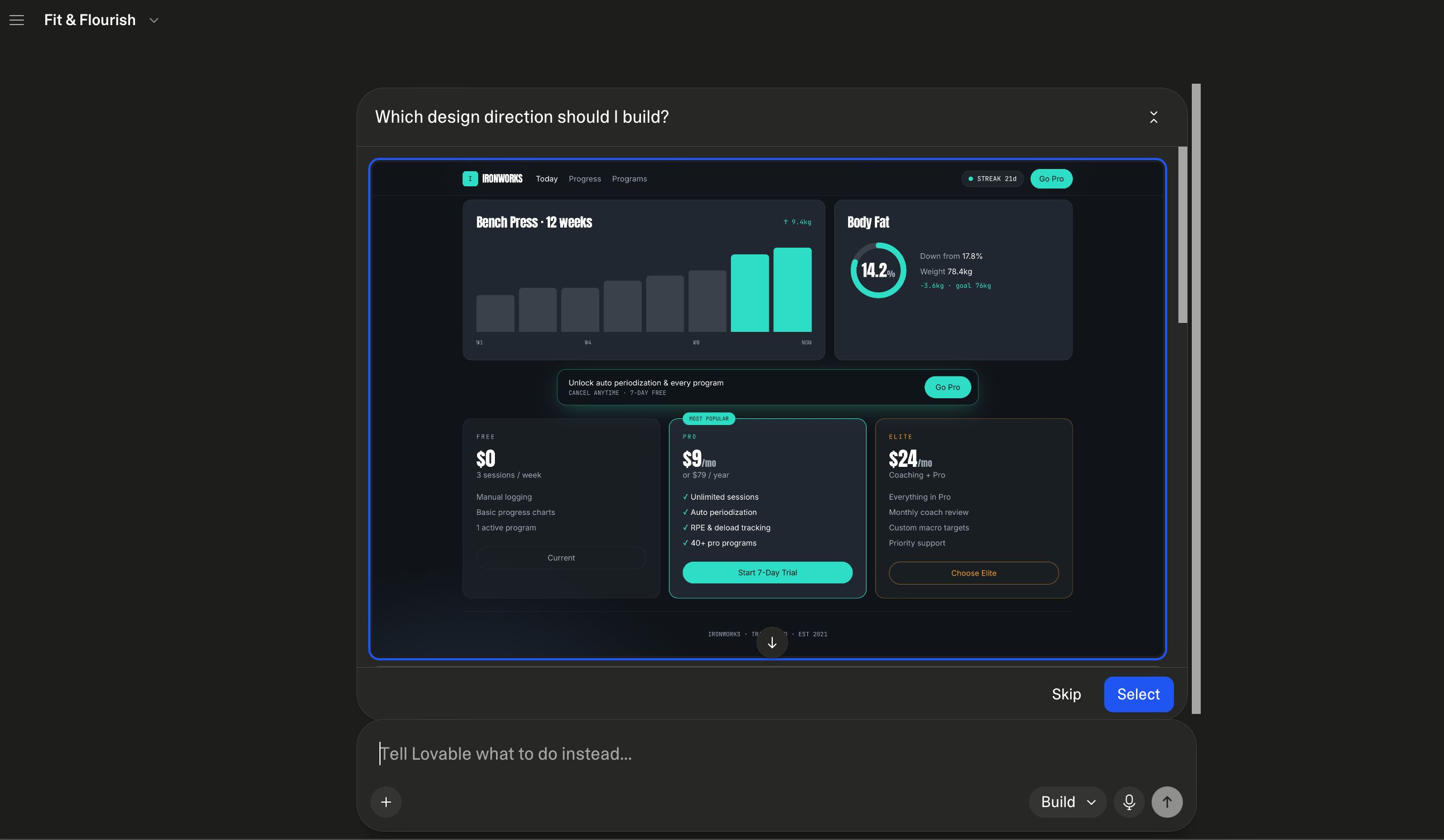
I noticed this in Lovable recently. Instead of building the magical app for you right away, it stops you midway and asks you to pick a theme. It generates a couple of designs and asks which style you prefer before it goes on. They're asking for additional input to make you part of the process, not a passive observer.
Flatter me.
I've been working with a team where I'm constantly pushing commits I wrote with Claude, and I noticed on GitHub that the commit is submitted by “Anastasia and Claude”. Which is absolutely ridiculous, because in my mind I did so little of the job that I don't even deserve to be mentioned.
But it made me feel so good…….
You push something big, and you go, oh my god, mom, look at me, I pushed some code. I am not a technical person, so it empowers me so much. It makes me feel like a collaborator instead of a passive client, and I value the output more, because I feel like I invested a lot into it.
ONE THING TO REMEMBER
Next time you hear output complaints, don’t rush rebuilding the whole system behind closed doors. Find a way to bring users into the process in a way that not only improves the input and the context, but also shows that they’re collaborators. Because the quality is rarely objective, and if people don’t value what you produce, it will never be good enough.
Anyway, what are your thoughts on this?