

Hi everyone,
I feel like there is a shift in PLG happening right now. For a very long time, we’ve all been obsessing about the first session, and don’t get me wrong, it’s been very important. But I feel like there are more and more questions linked to habit formation and retention.
And I have bad news for you.
Resolving them actually takes way more time and way more trial and error than working within the first session, which is still hard.
So today I wanted to dive into this challenge and look at a couple of strategies that actually help you work with it.
THE CHALLENGE
The first session is incredibly important, and it’s hard enough to deliver the value within it and produce good results. But if you look at the overall health of the product, compounding growth, recurring upgrades instead of upgrades within the first session, satisfaction is not enough.
Everyone keeps saying how activation is better with AI and how much faster we can deliver the value. But according to ChartMogul’s retention report, AI-native products consistently have much higher churn.
When we see something like this, we drift to the question: is the output good enough? And don’t get me wrong, sometimes it is the problem.
But way more often, we are so obsessing about delivering the first value as fast as possible that we forget to establish the returning loop.
On the landing page we see “transcribe the meeting in seconds”, “build the presentation in seconds”. People sign up, get that exact result, and the loop is closed. And with so many products on the market for every single solution, there is no guarantee they will even remember us the next time the problem comes back.
So, what should we do when a good result isn’t good enough anymore?
THE GAP
In 2005 marketing researchers asked kind of the same question: do satisfied customers buy more?
Everyone assumes yes. So they tested it.
They took the customers of a retailer and asked them two things. How satisfied are you? And are you planning to come back?
Sneaky enough, they didn’t stop at what people said. They followed what the same customers actually did over the following months: did they come back and buy again, or not.
What do you think happened?
With what people said, it worked exactly like we all expect. The happier the customer, the more they said they’d come back.
But with what people actually did, satisfaction on its own didn’t predict anything. Happy customers didn’t come back just because they were happy. It only turned into real visits when other things lined up, like how convenient it was to come back and how much competition was around.
So essentially this is the gap between "I know exactly when and why I will use it next time" and where they actually are: they just received everything they needed, and they're ready to stop thinking about this product forever.
HOW TO WORK WITH IT
There is no silver bullet here, because all products are different. But let me try to draft some possible tactics based on how habit-driven your product already is.
1. The trigger already exists in their week.
Some products will inevitably be linked to environmental triggers, and in this case our job is just to connect them to that existing process.
Granola, for example, kind of gets embedded into the system that you have already. Instead of going with some one-time solution, like record this meeting right now, transcribe this meeting right now, they get embedded into your current flow. And they establish it from the landing page. It doesn’t lead with anything quick or one-time, it kind of establishes that they’re selling the system for the process that runs on a daily basis.
So after you sign up and connect your calendar, you actually see all of your upcoming meetings put together, so Granola would be able to join them.
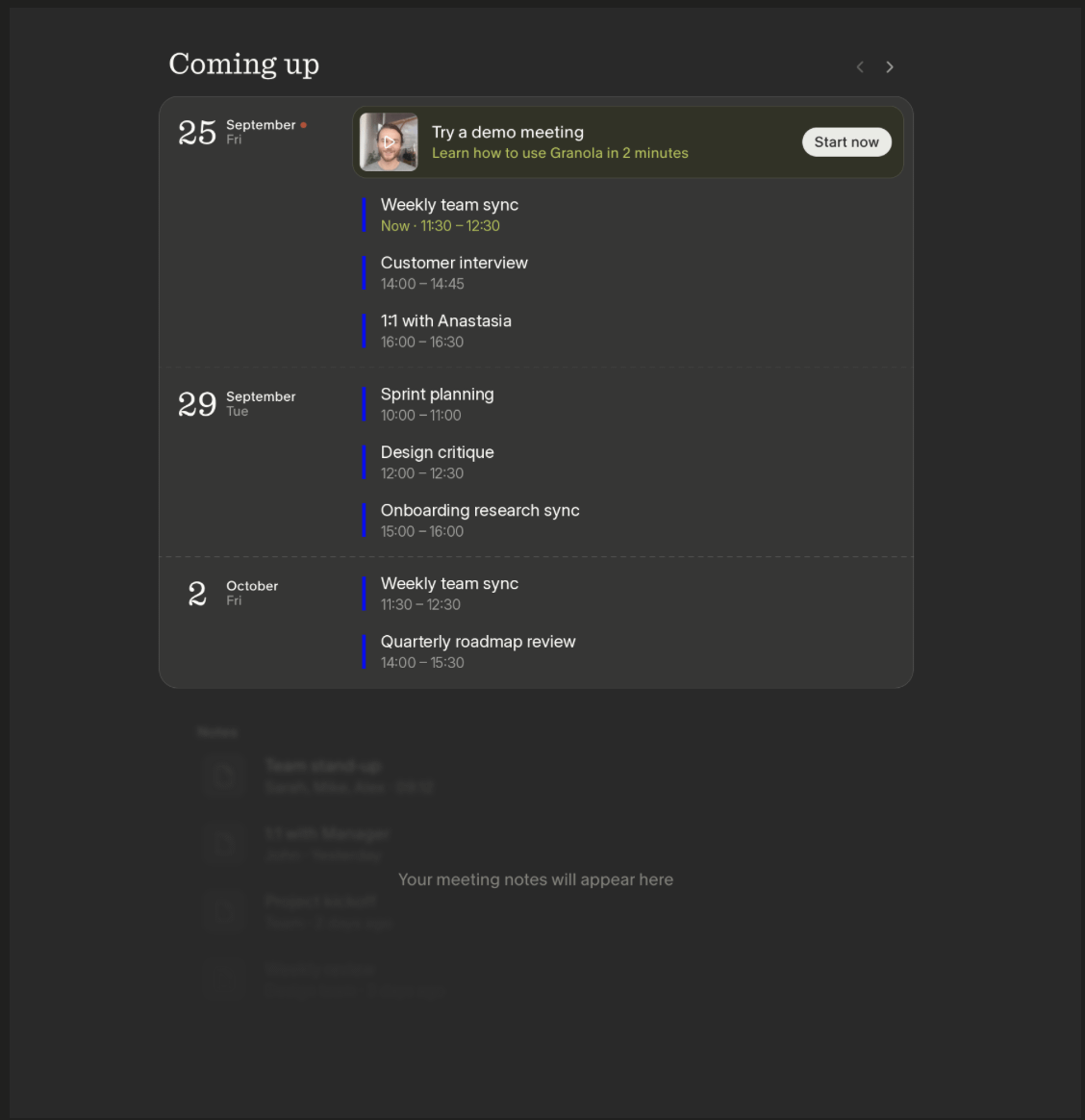
So from the first screen, it's not a one-time solution, it's something that will be interactive with your system.
This is also how Claude and other tools are trying to drive agent adoption right now: they prompt you to schedule the task that they saw you repeating.
2. There’s no outside trigger, but the work is ongoing.
If we talk about the usage-based thing, then credits renewal can be really helpful for a free tier. This is what Lovable does, and a lot of other AI services: you have the updated limit every day, so you have a reason to come back every day.
I even know people who build just within the free limits, and if it takes them a couple of months, it will take them a couple of months, but they're dedicated to build within the free limits.
3. There’s no outside trigger, and the result is one-time.
For example, you build a prototype once to show your point, and it’s not clear when you will need it again. So make it easy to take the next step with the result.
Sometimes the next step is sharing it and getting feedback. Sometimes it’s taking the result and applying it somewhere else. If that next step happens through your product, they have a reason to come back.
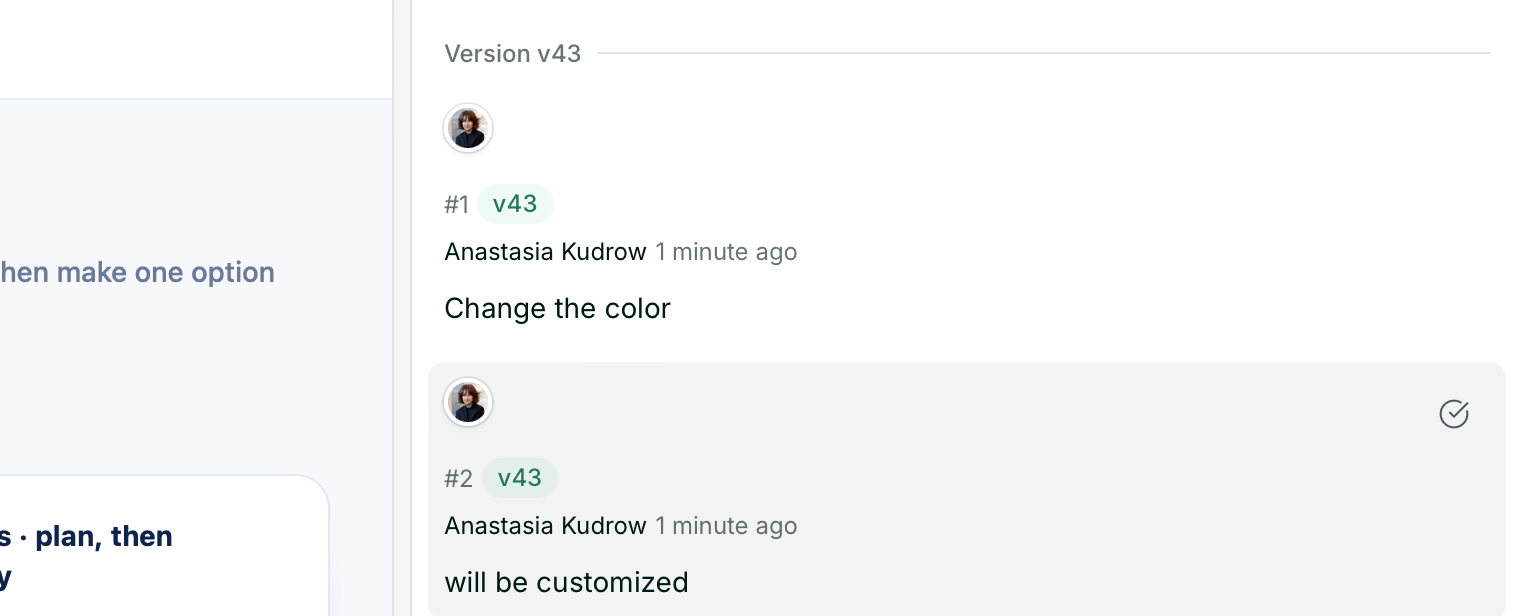
For example, the reason why for a very long time I was using Magic Patterns instead of Claude Code was because it was easier to share the designs. And what I really loved, my clients could go and leave comments directly on the designs, and I could add my comments, clarifying some of the suggestions and giving the context. So you go from "I created a design" to "I created a collaborative ground for our future work". And in this case, I would be prompted more to come back and keep working there, because it was so easy to access for everyone.
Gamma and Loom send you analytics updates when someone watched your video/presentation, so you have a reason to come back and check who it was and what happened there.

ONE THING TO REMEMBER
Delivering first value is important but not nearly enough for long-term growth.